Post-Race Weight Gain: Why the Scale Bump Is Actually a Good Sign
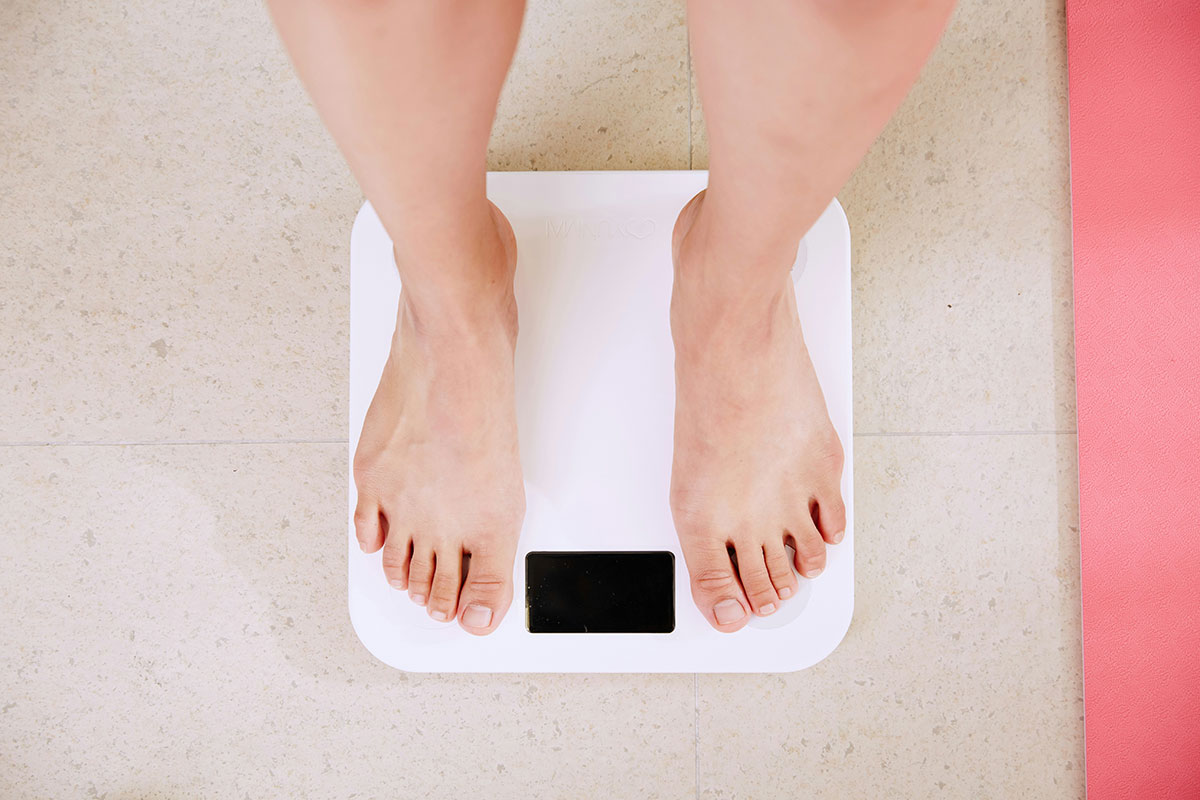
You wake up feeling sore and puffy the day after a race, step on the scale, and confirm what you intuitively feel: you’re a few pounds above your pre-race weight. Logically, a massive calorie burn, up to 10,000+ calories for a full IRONMAN, should tip the scale the other way, so something must be wrong. Your first impulse may be to cut calories or jump right back into training. Please don’t! What you’re seeing is your body’s normal physiological response as it goes into full recovery mode.
Post-race weight gain isn’t the same as the off-season weight drift many athletes experience. That weight tends to build over months and is a separate conversation about energy balance. The jump you see on the scale in the first 24-72 hours after the race is mostly water. Specifically, your body is hard at work replenishing glycogen, rebuilding plasma volume, and retaining water and sodium as part of its hormonal stress-and-repair response. It’s most noticeable after a 70.3 or full IRONMAN, where fueling, fluid intake, and stress load are highest. Let’s dig into what’s going on and why this temporary bump is actually a good sign.
Glycogen restoration
Long-course races drain your muscle glycogen. As long as you eat plenty of carbs, your body starts refilling those stores within the first few hours after you finish. But the longer the race, the more muscle damage, which slows the process. After a long course race, full restoration can take several days, rather than the roughly 24 hours we see after shorter events. Here’s the kicker: each gram of newly synthesized glycogen is stored with approximately three grams of water. So, replenishing 400–500 grams of muscle glycogen adds about 3.5–4.5 pounds, mostly from water, packed in your muscles. In other words, much of the bump you see on the scale in the first few days is restored fuel.
Rehydration
Glycogen isn’t the only reason the scale climbs. It’s normal to finish a long race dehydrated, since even a solid race hydration strategy can’t fully offset hours of sweat losses. In the 24 to 72 hours after the race, fluid-conserving hormones (aldosterone and vasopressin) remain elevated, signaling your body to hold onto fluid to restore plasma volume and electrolyte balance. The extra water weight won’t stick around long, so don’t cut back on fluids or salt to bring the number down. Your body needs both right now.
Cortisol spikes and inflammation
Racing 70.3 or 140.6 miles puts your body under more stress than a typical training day. During and after the race, cortisol, your primary stress hormone, spikes, signaling your body to retain water. Prolonged physical exertion causes muscle microdamage and inflammation. And the longer, hotter, and tougher the race, the longer recovery may take. As your body begins repairs, fluid moves into damaged tissues, which can explain your tight, swollen legs. You’ll notice improvement when your kidneys start clearing the excess fluid, leading to more frequent bathroom visits. A little puffiness for a couple of days post-race means the repair process is underway.
Hunger cues and appetite
As training volume comes down after a race, you might expect your appetite to follow. And, for the first several hours, it often does, since hard effort can temporarily suppress hunger. But over the next day or two, it returns with a vengeance. That’s because a slower-moving hormonal system (primarily ghrelin and leptin) signals your brain to respond to the energy deficit you built up on race day. You may feel hungrier for several days, often craving energy-dense, salty, carb-rich foods (think fries, burgers, and pizza). And all that yummy food, along with the water and sodium that come with it, adds to the scale number too. It’s not a lack of willpower or a total loss of control; it’s your body refueling.
A word of caution
Following an endurance race, some swelling is expected, but I’d be remiss not to flag a few scenarios that, although rare, require medical attention. If one leg swells, especially with calf pain, warmth, or redness, it may indicate a blood clot. Swelling with shortness of breath or chest pain is an emergency; seek immediate attention. Dark cola-colored urine with severe muscle pain or weakness could signal rhabdomyolysis: a condition involving severe muscle breakdown that can lead to kidney damage. And if you finish the race heavier than you started and experience confusion, headache, or nausea, it could be hyponatremia (low blood sodium); seek medical help right away.
The bottom line: this is not the time to diet
For most athletes, a few extra pounds in the days after a long-distance race signals a healthy recovery. Still, it can be tempting, especially if you keep close tabs on your weight, to see the number go up and immediately want to cut back or restrict. Resist the urge. Your body needs carbohydrates and protein to rebuild glycogen and repair tissue; your fluid and electrolyte balance needs restoring, and your immune system needs adequate energy while under duress. Restricting food and fluids now won’t get your weight back on track. It will delay glycogen restoration, prolong fatigue and soreness, and potentially increase your risk of illness.
As your fluid levels normalize and inflammation subsides, most of the extra weight comes off naturally, typically within three to seven days. You’ve demanded a lot from your body in training and on race day, so give it what it needs: plenty of nutrient-rich food, adequate hydration, rest, and quality sleep. Then step back and trust your body and the process.
 Why Your Perfect Nutrition Plan Falls Apart at 90 Degrees (and How to Pivot)