
An Analysis of 2026 IMWCPros’ High-Carb Nutrition Plans
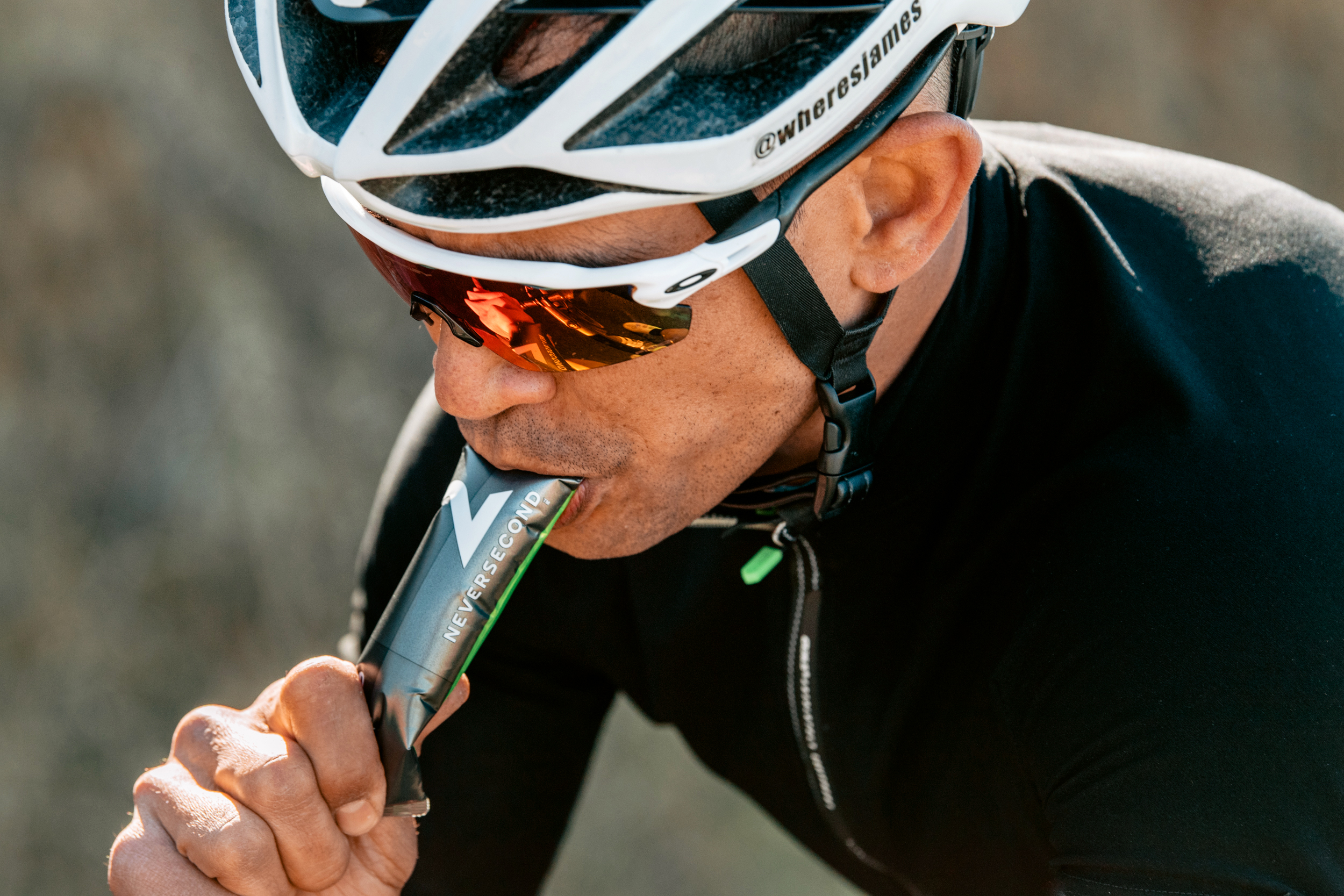
The IRONMAN World Championship has become a showcase for the Carbohydrate Revolution—a movement emphasizing the vital role of carbohydrates (carbs) in athletic performance. In their relentless pursuit of excellence, athletes continuously push the limits, pioneering new frontiers in sports nutrition. This year, the high carb fueling strategies used by top pros at the IMWC races were truly impressive.
Let’s dive into this year’s top male and female pros’ sport fueling, how they devise and integrate fueling, and the implications for age-group athletes. However, for context, let’s briefly review how fueling recommendations have evolved to what they are today.
Over the past 15 to 20 years, endurance sport fueling recommendations have evolved in response to ongoing research. Before 2010, recommendations suggested up to 60g of glucose per hour due to the limitation in intestinal absorption. Science evolved primarily from the discovery that combining multiple transportable carbs, such as glucose and fructose, facilitated higher rates of absorption. Since then (2010-2013), the recommended amount is 60 to 90 grams per hour for events lasting 2.5 hours or longer. Recent research and evidence from elite athletes competing in the Giro d’Italia, Tour de France, and IRONMAN events suggest that consuming 90 to 120 grams per hour is optimal for achieving peak performance, while supporting faster recovery and reduced muscle fatigue. Today’s top pros at the IRONMAN World Championships are consuming 120 grams or more per hour, pushing performance boundaries and surpassing current research.
While specific fueling plans are private and can change based on conditions, the overall trend among professional endurance athletes involves high-carb intake, intense gut training, and a carefully devised combination of drink mixes and gels.
Male professionals – Nice, France
Casper Stornes – 1st place, finish time 7:51:39, a new course record, including a blistering 2:29:25 run split. Swim 45:21, Bike 4:31:26, Run 2:29:25, the first sub-2:30 marathon in an IROMAN World Championship.
Pre-Swim: ~60g carbs
T1: 80-100g
Bike: 175-180g carbs, and 720 calories per hour.
Run: 100-120g carbs and 400-480 calories per hour
Fueling Totals: 182g of carbs, 728 calories, and 31.7 oz per hour = 5600 total calories.
Nutrition product: Carbo Tonic, gels
Analysis: Casper’s fueling strategy is aggressive but necessary to meet his higher carb oxidation rates. In addition to the bike and run intake, Stornes consumed ~200+ grams of carbs before the swim and 80-100 grams in T1. His approach is grounded in continuous metabolic testing at race intensity and refined through months of targeted training. Over time, he trained his gut to effectively absorb and utilize 180 grams of carbohydrates per hour, allowing him to perform at an exceptionally high level while avoiding gastrointestinal issues. To compensate for swim energy expenditure, he consumed 80-100g in T1.
Kristian Blummenfelt – 3rd place, finish time 7:56:36. Swim 46:08, Bike 4:31:20, Run 2:34:38.
Fueling:
Bike: 177g carbs and ~710 calories per hour.
Run: ~130g carbs and ~520 calories per hour.
Nutrition product: Maurten 320, and gels
Analysis: We aren’t privy to his pre-swim or transition fueling, if applicable; however, Kristian’s fueling is comparable to Casper’s on the bike and run. He also relies on continuous testing, focusing on precise metrics such as power, heart rate, lactate threshold, and substrate utilization, to fine-tune every aspect of his performance, including his nutritional needs.
Jamie Riddle – 10th place, finish time 8:15:00. Swim 45:15, Bike 4:37:21, Run 2:47:35.
Fueling totals: 130g carbs, 520 calories, and 878mg sodium per hour.
Nutrition product: 226ERS – Hydra Zero Lemon, high fructose gels, high fructose neutral, and salt tabs
Analysis: Jamie finished in the top 10 in his first attempt at the IRONMAN distance. His race-day carb intake is lower than Caspers’ and Kristian’s, but many other factors contribute to a finishing time beyond just fueling.
Female professionals – Kona, Hawaii
Solveig Løvseth – 1st place, finish time 8:28:27. Swim 55:40, Bike 4:31:53, Run 2:55:47 – the second fastest marathon split.
Pre-Race (>30 minutes): 16oz of PH, 1500 tab, PF 60 Chew Bar, three slices of toast
Pre-Swim (<30 minutes): 60 grams carb via 2 x PF gel with caffeine
Bike: ~145g carbs, 41 oz, and 1,103 mg sodium per hour
Run: 139g carbs, 63 oz, and 1,536 mg sodium per hour
Fueling totals: 132g carbs, 44oz, 868mg sodium per hour.
Nutrition product: Precision Hydration – PF 300 Flow gel, PF 30gel, PF 60 Chew Bar, PH 1500 tablets, 250mg electrolyte capsules
Analysis: Solveig focused on gut and heat acclimatization training to optimize her high-carb intake in the hot, humid conditions of Kona. This strategic preparation proved successful late in the race, as she maintained her strong effort and ran her way to victory at the IMWC!
Kat Matthews – 2nd place, finish time 8:29:02. Swim 55:43, Bike 4:40:08, Run 2:47:23, a Kona run course record!!
Breakfast: Rice and jam/honey = 150g carbs
Pre-swim: 80g Raw fuel in a bottle with hydration and caffeine
T1: 500ml bottle of raw and replenish (carbs and electrolytes)
Bike: ~120g carb and 500-1000mg sodium per hour
T2 – replenish (water with electrolytes)
Run: 60g and 500-1000 mg sodium per hour
Nutrition product: Raw Endurance – raw, replenish, and gels
Analysis: Kat also prepared with heat acclimation training to support higher efforts through gut training. To compensate for the swim energy expenditure, she fueled in T1, ahead of the bike. Finishing with the run course record is impressive and even more remarkable is that she negative split the first and second halves –1:23:42 and 1:23:41. This indicates the effectiveness of her fueling strategy right to the very end.
Jocelyn McCauley – 7th place, finish time 8:59:33. Swim 55:37, Bike 4:40:27, Run 3:17:35
Bike: 109g carbs, 54oz, 983mg per hour
Run: 126g carbs, 37oz, and 942mg sodium per hour
Fueling totals: 106g carbs, 40.5oz, 941 mg sodium per hour
Nutrition product: Precision Hydration – PF carb and electrolyte drink mix and PF 30 gels
Analysis: Over the past six months, Jocelyn has refined her fueling strategy. For example, in March 2025 at IRONMAN New Zealand, her first big race post-surgery, her average carb intake was ~75g, lower than the ~106g per hour in Kona. This likely reflects her ongoing effort to optimize nutrition. Interestingly, Jocelyn reverses the conventional fueling trend of front-loading carbs on the bike and reducing consumption on the run. Instead, she takes in more carbs on the run than on the bike. This pattern suggests she has a high carb tolerance on the run and indicates a strategy to maximize performance by leveraging her ability to handle more carbs late in the race.
Sport RD analysis of pros’ fueling
Consuming up to 180 grams of carbs per hour is an aggressive and cutting-edge strategy. And, for elite athletes, maintaining higher-carb availability is necessary to sustain their intense effort. While fat plays a larger role when exercising at lower intensities, carbs become the primary energy source at higher intensities. The higher the effort, the higher the rate of carb oxidation. Because pros compete at such high and sustained intensities, they require more carbohydrates to support their efforts. But nothing in a pro’s race plan is haphazard – it’s all meticulously crafted.
They rely on metabolic testing to devise a fuel plan based on their carb and fat oxidation rates at race efforts. This precise data helps them craft a fuel plan tailored to their physiology, race effort, and goals. The fuel plan is then refined through months of targeted gut training and retesting.
The foundation of high-carb fueling is a high-carb diet. Maintaining high carb availability is critical, both in training and in the diet. One doesn’t work without the other. During peak training, elite triathletes often consume 8 to 12 grams of carbohydrates per kilogram of body weight. A high-carb diet helps maximize glycogen stores and enhance the body’s ability to utilize carbs more efficiently during training. For example, a 154 lbs. (70kg) athlete would consume 560-840 grams of carbs per day.
Implications for Age-Group Athletes
Age group athletes generally race IRONMAN at lower intensities and are out on the course longer than pros, so fueling at the same rate as pros may do more harm than good. In this case, more is not always better. Carbs are essential, but for amateur athletes, fueling beyond 90-100 grams per hour requires a high-carb diet, consistent gut training, and higher carb oxidation rates to tolerate and absorb larger amounts on race day. Ironman is challenging enough – there’s no need to complicate it with an overzealous fuel strategy. For most, 70-90g per hour is sufficient.
For pros, racing is their profession; their livelihood depends on it, and their goal is to win. For age groupers, training and racing are often more of a lifestyle sport, balanced with juggling careers, families, and other commitments, leaving metabolic testing and gut training lower on the priority list.
As for daily carb intake, age-group athletes often struggle to comply with the post-workout snack or to eat enough carbs on heavy training days. And trust me, I get it, life is busy. Training and refueling are not our full-time jobs, and when things get hectic and something must give, periodizing all the meals and snacks may fall by the wayside.
Far too often, I see athletes who under fuel during training but plan to fuel with 90+ grams per hour on race day, a method termed the ‘train low and race high’ approach. It’s akin to trying to do an IRONMAN distance race without proper training. Not surprisingly, it rarely works out. To avoid a race-day fueling debacle, it’s crucial to practice your intended fuel plan repeatedly in training at race-similar intensities and temperatures so nothing feels new on race day. Fueling adjustments may be necessary if you drop a bottle, take longer than expected, or the weather is not as predicted. For this reason, it’s essential to have a backup plan for all possible scenarios so you’re prepared for any curveball race day throws your way.
On the flip side, if you’re an age grouper who consistently consumes 90-100 grams per hour during training, follows a high-carb diet, and still finds yourself routinely low on energy during endurance sessions, it’s worth exploring a fuel adjustment. The best approach is to undergo metabolic testing to determine carb and fat oxidation rates for the bike and run at race-similar intensities, then gradually increase carbs through dedicated gut training.
Final tips
Carbohydrate fueling strategies demonstrated by pro triathletes this year in Nice and Kona highlight their role in sustaining performance. However, while these high carb plans are effective for pros like these elite athletes, it’s not a one size fits all solution as shown by the six pro fuel plans we reviewed. For your upcoming endurance triathlon, start developing your fuel plan and training your gut well in advance of race day. And if you need guidance, consider collaborating with a sports RD to create an individualized plan that helps maximize your race day performance.